“insect pests” search results (500)
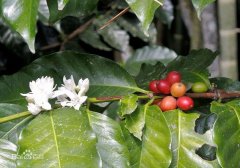
Nyeri Central Dashan area of Jiatugi processing Plant in Nyeri production area of Kenya
According to botanists in SL laboratory, SL28 and SL34 are genetic variants. Among them, SL28 has a mixed pedigree of French missionaries, mochas and Yemens Tibica. The goal of cultivating SL28 was to mass produce coffee beans with high quality and resistance to diseases and insect pests. Although the later production of SL28 was not as large as expected, copper leaves and broad bean-shaped beans were very popular.
2016-07-08 Kenya Nyeri producing area home Tuji Gatugi processing plant central
The best coffee in the world
When tasting single-origin coffee, you will see some information about the variety in addition to the country of origin, production area and geographical and climatic conditions. Arabica, Robosta, Bourbon, etc. For coffee flavor, of course, the difference in the production area is relatively large. Variety differences become interesting when discussing the variety of beans produced in the same region.
2014-11-19 Coffee knowledge Fine coffee learning Coffee varieties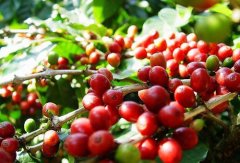
Arabica coffee accounts for about 65% and 80% of the world's coffee beans.
Arabica coffee accounts for about 65% and 80% of the world's coffee beans, and its excellent flavor and aroma make it the only coffee among these native species that can be drunk directly and alone. However, its resistance to drying, frost, diseases and insect pests is low, especially to the biggest natural enemy of coffee, leaf rust, so all producing countries are committed to improving varieties. For example, it is well known that
2016-06-01 All over the world coffee beans rabbis growers coffee about 65% 80% the whole world.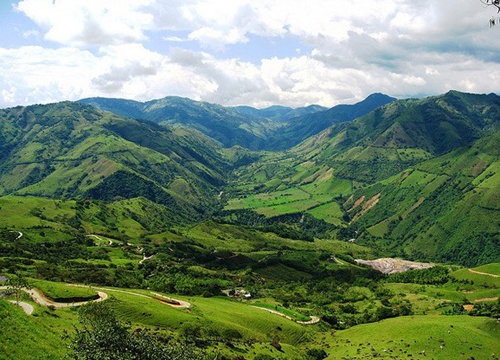
Columbia Coffee Coffee Manor Columbia Huilan Coffee Estate
Manor basic information origin: Colombia Huilan Lerusa Manor Tree species: old varieties Bobang 60%, Tibica 40% altitude: 1550 meters taste: sweet pulp, mellow, depth, excellent sense of balance the manor does not use a high-speed and convenient dryer, but uses the traditional SUN DRY drying method, acid and alcohol bitterness get the greatest concentration and sublimation. The highest grade in Huilan District, a famous place in Colombia.
2016-03-18 Colombia Coffee Manor Huilan Foundation Information Origin
Introduction to the Flavor characteristics of Tanzania Coffee
Due to political instability and rampant diseases and insect pests, the coffee industry in Tanzania has been damaged, resulting in a decline in the overall level of coffee and instability in quality, which in turn lead to lower prices, which is usually the result of a further decline in the coffee industry. What's more, it is estimated that more than 12% of the Arabica coffee grown in northern Tanzania from 1969 to 1985
2016-06-12 Tanzania coffee flavor characteristics introduction due to political situation instability plus disease
Introduction to the Flavor characteristics of Tanzania Coffee
Due to political instability and rampant diseases and insect pests, the coffee industry in Tanzania has been damaged, resulting in a decline in the overall level of coffee and instability in quality, which in turn lead to lower prices, which is usually the result of a further decline in the coffee industry. What's more, it is estimated that more than 12% of the Arabica coffee grown in northern Tanzania from 1969 to 1985
2016-06-12 Tanzania coffee flavor characteristics introduction due to political situation instability plus disease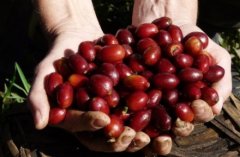
Coffee beans original Arabica, Robasta, Riperica, Exelsa
There are four original species of coffee: Arabica species in Ethiopia, Robasta and Riperica species in Congo, and Exelsa. The original species are used for breeding and research. So far, there are more than a hundred coffee varieties in the world, of which 76% are Arabica, and 24% are Robasta and Riperica. A: Arabica species (Arabica): at present
2015-01-04 Coffee beans original rabbi Robbas Buzz Rippe Rika Ike Sail Cha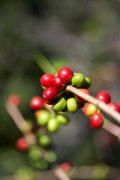
Washing AA quality coffee beans from Jiatugi treatment plant in Nyeri production area of Kenya
According to botanists in SL laboratory, SL28 and SL34 are genetic variants. Among them, SL28 has a mixed pedigree of French missionaries, mochas and Yemens Tibica. The goal of cultivating SL28 was to mass produce coffee beans with high quality and resistance to diseases and insect pests. Although the later production of SL28 was not as large as expected, copper leaves and broad bean-shaped beans were very popular.
2016-05-10 Kenya Nyeri producing area home Tuji Gatugi treatment plant washing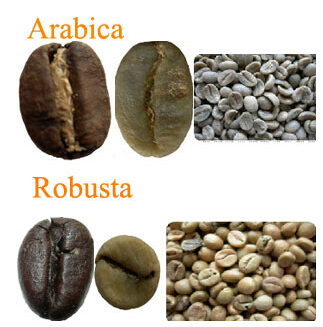
What's the difference between Arabica and Robusta Arabica coffee beans
In many places where coffee is sold, it is not difficult to find words like "100% Arabica". Even canned coffee appears in a style called "XX Arabica Coffee", which makes one wonder: what is "Arabica Coffee"? In fact, Arabica is the name of the coffee tree variety (species). "Coffea Arabica" and "Robbs"
2016-03-22 Rabbi Robbins Booth Coffee beans what different many sales Coffee Land
Basic knowledge about coffee trees
Breed of coffee: When you taste single-origin coffee, you will see some information about the variety in addition to the country of origin, production area and geographical and climatic conditions. Arabica, Robosta, Bourbon, etc. For coffee flavor, of course, the difference in the production area is relatively large. When it comes to different varieties of beans produced in the same locality, the differences between varieties change.
2014-12-26 Boutique Coffee Basics Common sense About Foreword Tasting Single item Except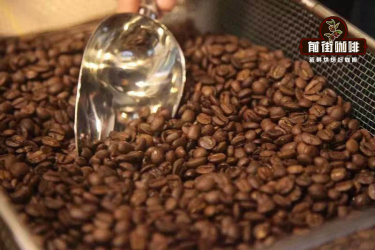
Coffee futures American type C futures Arabica coffee bean price trend quotation contract latest news
The American coffee bean futures business began with the New York Coffee Business in 1882, which added sugar futures contracts in 1916 and changed its name to New York Coffee and Sugar Trading. It was not until 1979 when it merged with the New York cocoa business that it became known to the giants as the New York coffee, sugar and cocoa business.
2023-01-06 Coffee knowledge coffee futures coffee encyclopedia
History of coffee development in Tanzania the origin of coffee in Tanzania
Sonia Chag AA Coffee (Chagga AA) is famous for its full-grained and fragrant quality. Due to political instability and rampant diseases and insect pests, the coffee industry in Tanzania has been damaged, resulting in a decline in the overall level of coffee and instability in quality, which in turn lead to lower prices, which is usually the result of a further decline in the coffee industry. It's worth it.
2016-05-26 Tanzania Coffee Development History Origin Niya Chag Chagg
World boutique Coffee Manor beans: Hawaiian Kona Coffee (part I) has a smooth and fragrant flavor
Some bloggers mentioned coffee grown in Hainan, China. As far as I know, Mr. Lin Wending, a Taiwanese businessman, grows coffee in Hainan, creates his own brands of antique coffee (synonymous with English Good Sir) and strong coffee (synonymous with Chinese China), and introduces Arabica varieties with high yield and disease resistance from Brazil, which has achieved good results. Hainan Geology belongs to volcanic Red Earth and Coffee famous Kona Coffee of Hawaii
2015-12-22 World boutique coffee manor Hawaii Kona smooth fragrant flavor
Introduction of Coffee Encyclopedia Coffee
The kind of coffee [preface]: when tasting individual coffee, you will see some information about the variety in addition to the producing country, producing area, geographical and climatic conditions. Such as Arabica, Robusta, Bourbon and so on. As far as the flavor of coffee is concerned, the difference in producing areas certainly has a greater impact on the flavor of coffee. When it comes to different varieties of beans produced in the same place, the differences between varieties change.
2014-09-28 Coffee knowledge coffee varieties coffee encyclopedia
Introduction of Tanzanian boutique coffee characteristics of Tanzanian coffee quality of Tanzanian coffee
Due to political instability and rampant diseases and insect pests, the coffee industry in Tanzania has been damaged, leading to a decline in the overall level of coffee and instability in quality, which in turn lead to lower prices, which are usually the result of a further decline in the coffee industry. What's more, it is estimated that more than 12% of the Arabica coffee grown in northern Tanzania from 1969 to 1985 was smuggled.
2016-03-23 Tanzania boutique coffee introduction characteristics quality due to political situation no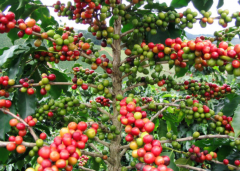
Tanzania Coffee Manor Coffee Bean Fine Coffee African Coffee
Due to political instability and rampant diseases and insect pests, the coffee industry in Tanzania has been damaged, resulting in a decline in the overall level of coffee and instability in quality, which in turn lead to lower prices, which is usually the result of a further decline in the coffee industry. What's more, it is estimated that more than 12% of the Arabica coffee grown in northern Tanzania from 1969 to 1985
2016-06-15 Tanzania coffee manor coffee beans boutique Africa flavor due to political situation
Two major coffee tree species
At present, the most important coffee trees in the world are Arabica and Robusta. These two kinds of coffee trees are the two original species of coffee trees, and the quality of coffee beans produced by these two kinds of coffee trees is also better than that of other coffee trees.
2014-06-09 Coffee knowledge Coffee Tree Coffee Encyclopedia
Low carbon is an attitude, the wonderful use of discarded coffee grounds!
The main uses of coffee grounds are as follows: 1. Coffee grounds, plant nutrients. Because coffee grounds contain nutrients needed for plant growth, coffee grounds are used as fertilizer around the roots of plants, which can not only nourish plants, but also prevent the occurrence of diseases and insect pests. two。 Coffee grounds can deodorize and deodorize. Coffee grounds have the ability to absorb odors. Coffee grounds can be put in small plates and placed in toilets and shoes.
2014-09-23 Coffee knowledge coffee utilization coffee residue
Coffee basics espresso Coffee Bean Source
Espresso commonly used beans we know that coffee beans are generally divided into Arabica and Robusta, the former is usually more advanced, the latter is promoted because the latter is easy to feed, like weeds with strong vitality. The former is not only usually raised at high elevations, but also vulnerable to insect pests. Robusta is usually the main ingredient of instant coffee.
2014-12-05 Coffee Basics Common sense espresso Coffee beans Source espre
The proportion of coffee powder to water in the variety of fine coffee.
Produced in Brazil and is a hybrid of Bourbon and Sumatra. Strong environmental adaptability, resistance to diseases and insect pests, high yield. Trees up to more than three meters high should not be harvested, the taste is more balanced, the taste is close to the traditional varieties. Catuai Carduwey is an excellent variety, which is suitable for the severe climate at high altitude and has high yield. it was first produced in Brazil and is a hybrid of caturra and mondu nove.
2016-06-08 Boutique coffee variety coffee powder proportion